
Ready, Jet, Cook Food Network
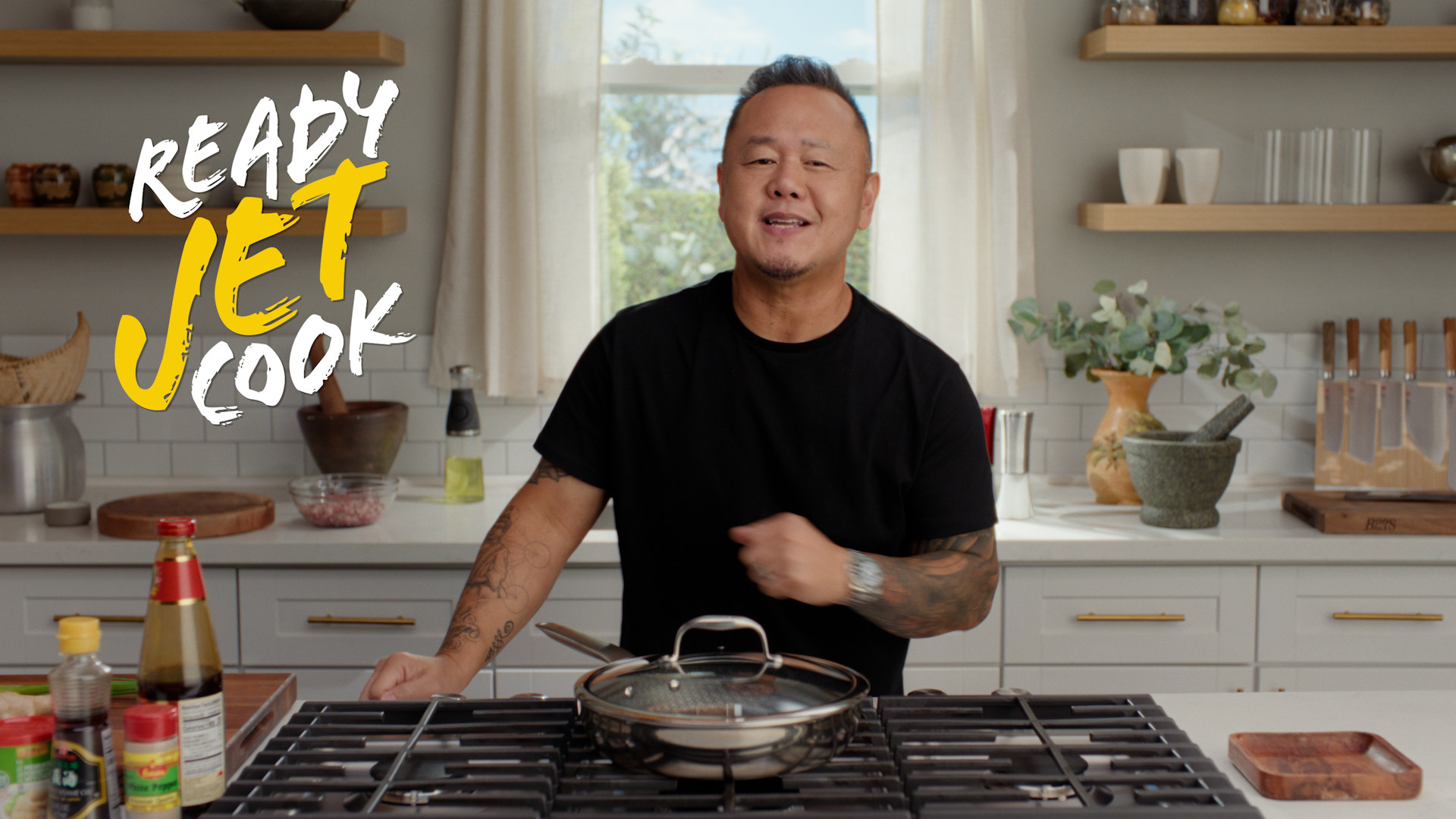
From shop to cook.
An Emmy and James Beard Award-nominated series.
FS MEDIA took Season 5 of Ready, Jet, Cook from development to network delivery. The series joins Jet Tila's personality and his knowledge of ingredients to recipes people can make at home. The season was planned as a single production that would feed full-length digital episodes, short vertical cuts for social and half-hour television, with Mike Irving directing and executive producing.
The approach
Food stories built around the person making them.
A cooking series has two jobs: to show the dish clearly and to give viewers a host they want to spend time with. FS MEDIA shaped the season so that Jet had room for his knowledge and his personality, while the ingredients, the technique and the finished plate stayed at the center of every story. The team's background in culinary entertainment guided how the series was developed and produced.
Pre-production
Connecting the store and the kitchen.
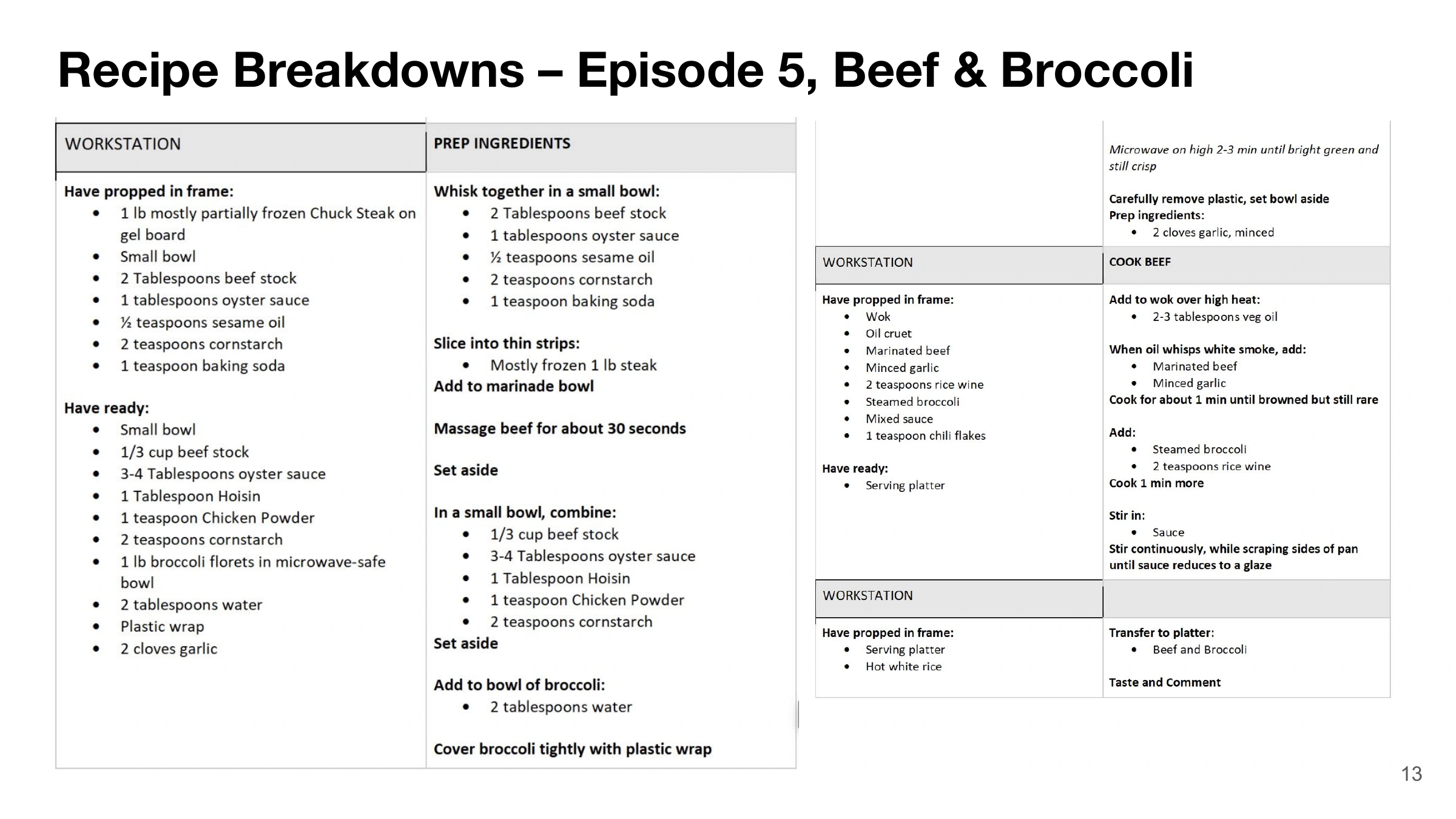
The recipes were worked out together with Food Network and Jet. The aim was food people already love and can manage at home, built on ingredients that give each story a natural starting point in the supermarket. FS MEDIA wrote the scripts, set up the workflow for recipes and ingredients, and turned the creative into one plan covering the market and the studio kitchen.
The grocery scenes were filmed in a working store, the Seafood City supermarket in Santa Clarita, and the cooking took place in the kitchen at STEEZ STUDIOS. Every episode opens in the aisles, where Jet picks out the ingredients and explains them, so the shopping belongs to the story and leads straight into the demonstration that follows.
Market shopping plan
Each episode opens on its ingredients, which tells viewers what they are about to cook and why those ingredients matter.
Combined shooting scripts
The scripts held the digital scenes together with the throws to commercial and the lines that bring viewers back, so one cook-through could supply more than one format.
Broadcast pairings
Every linear episode is built from two digital recipes. Their introductions, links and break points were fixed in the plan ahead of the shoot.
Every edit, planned on the page.
In the scripts, each recipe carried its digital ending, its throw to the commercial break and its return from it. Art direction, wardrobe, camera coverage and the schedule were then lined up against them, which gave the crew a working plan for everything each edit would need.
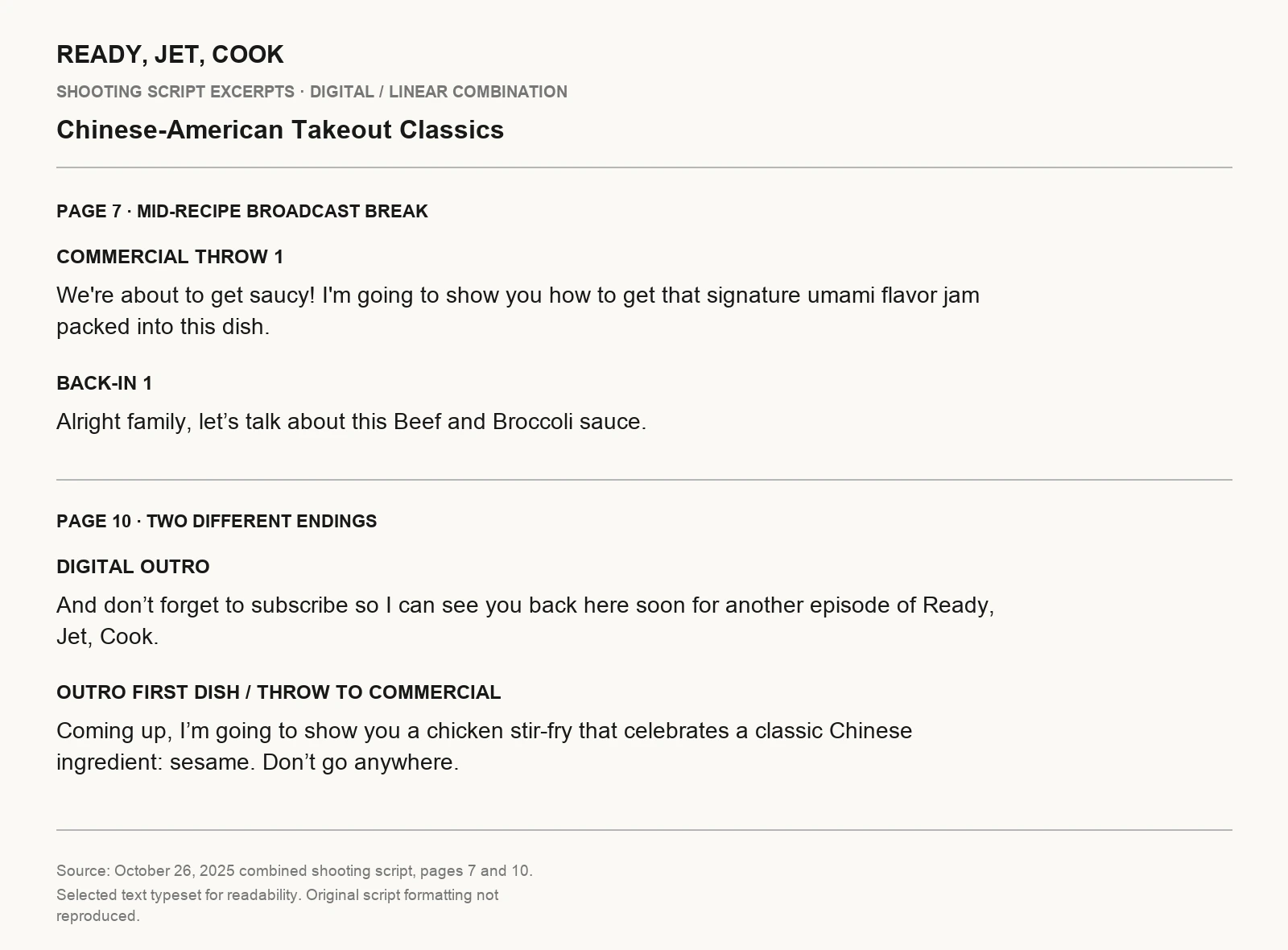
Selected excerpts from the October 2025 combined shooting script
Production
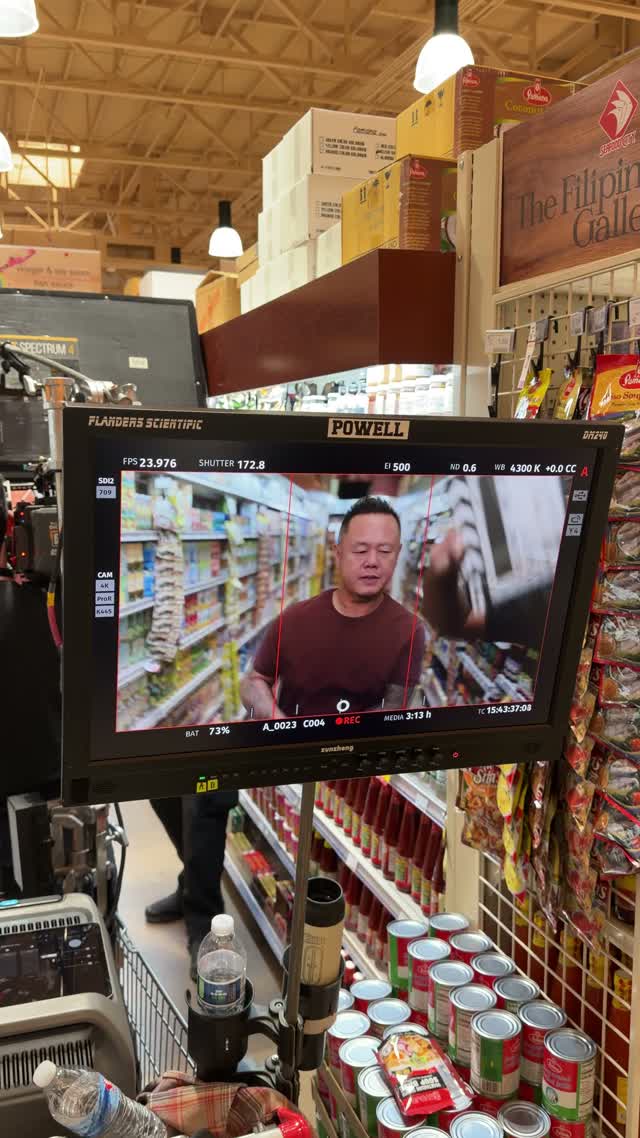
Five cameras, one cook-through.
Studio shoot
Four main days
Market shoot
One main day
Prelight
One day
Studio cameras
Five, running together
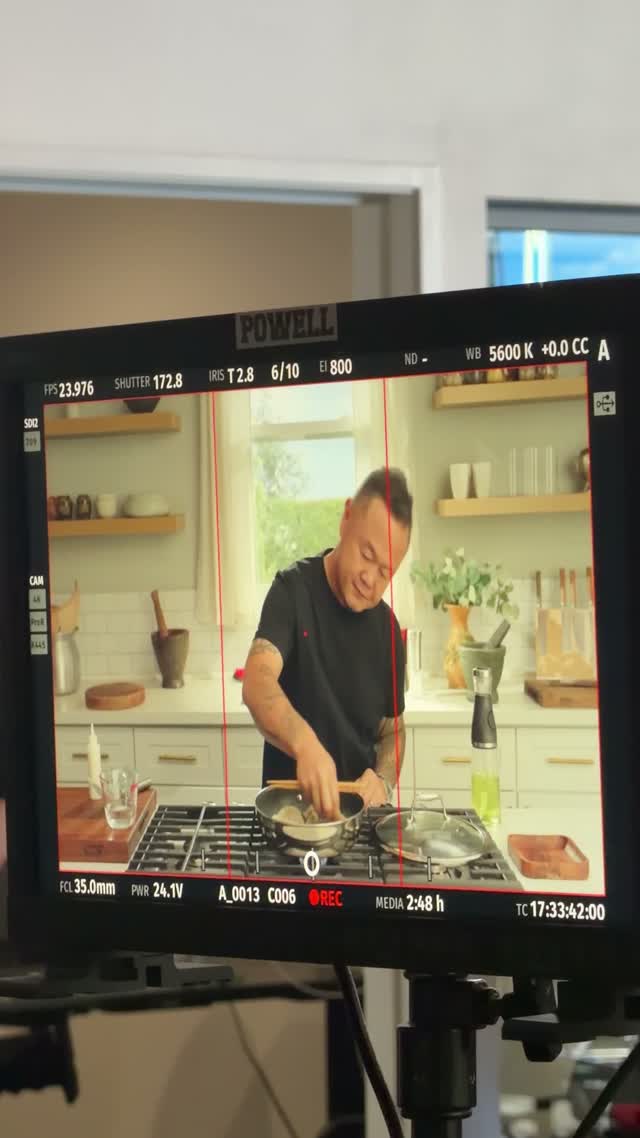
In the studio, five cameras ran at once: a locked-off wide shot, an angle from the side of the host, a camera kept on close-ups of the food and two mounted overhead, one above the counter and one above the stove.
Each recipe could then be cooked through a single time and still give every edit the angles and the detail it needed.
The production ran with a crew of 50. A smaller team handled the day at the supermarket.
On screen
Scenes from the series.
Each finished episode travels from the aisle to the plate: finding the ingredients, Jet teaching at the counter, the prep, the cooking seen from above and the dish at the end. The nine frames here follow that path.
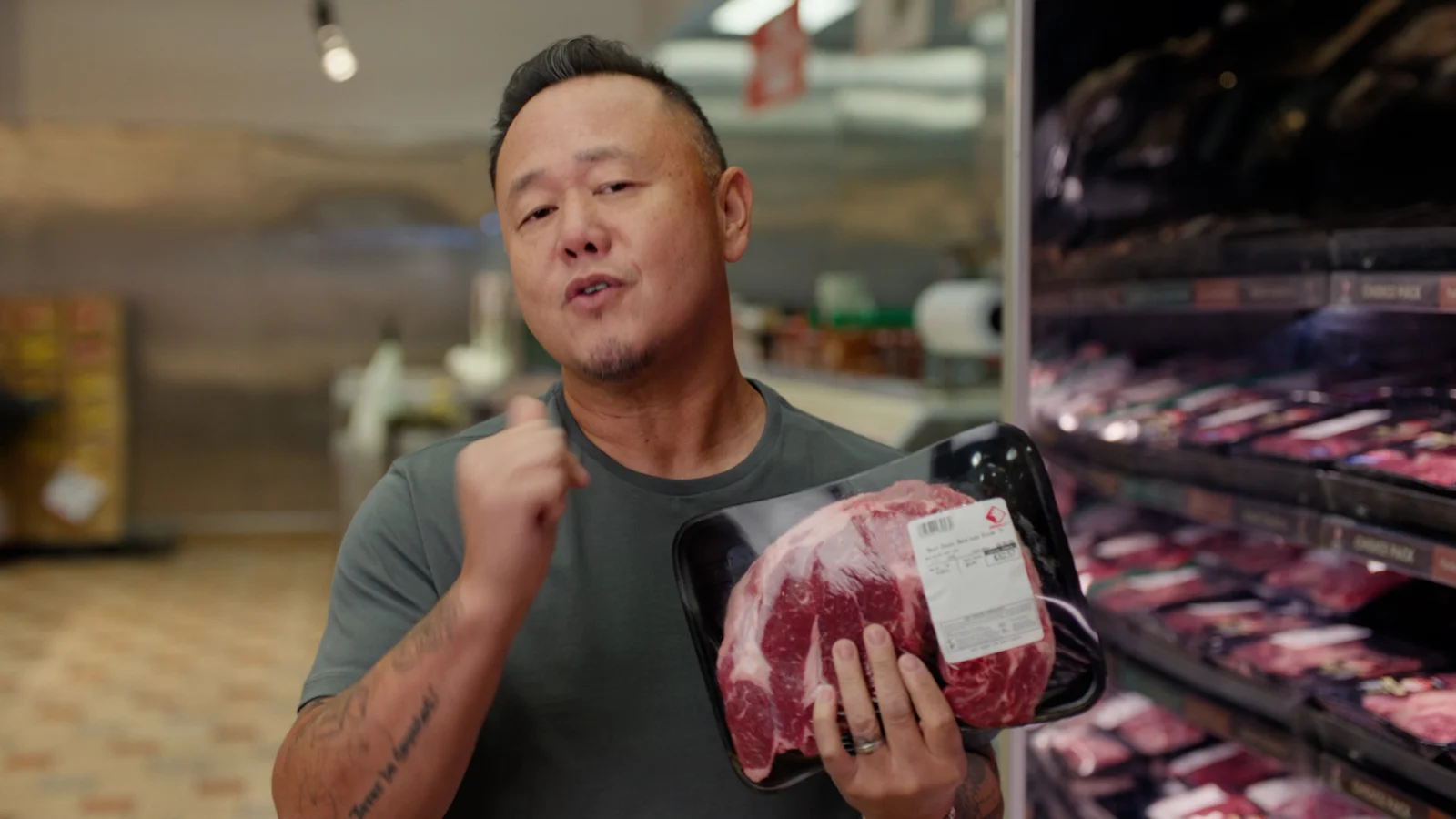
01 Finding the ingredients
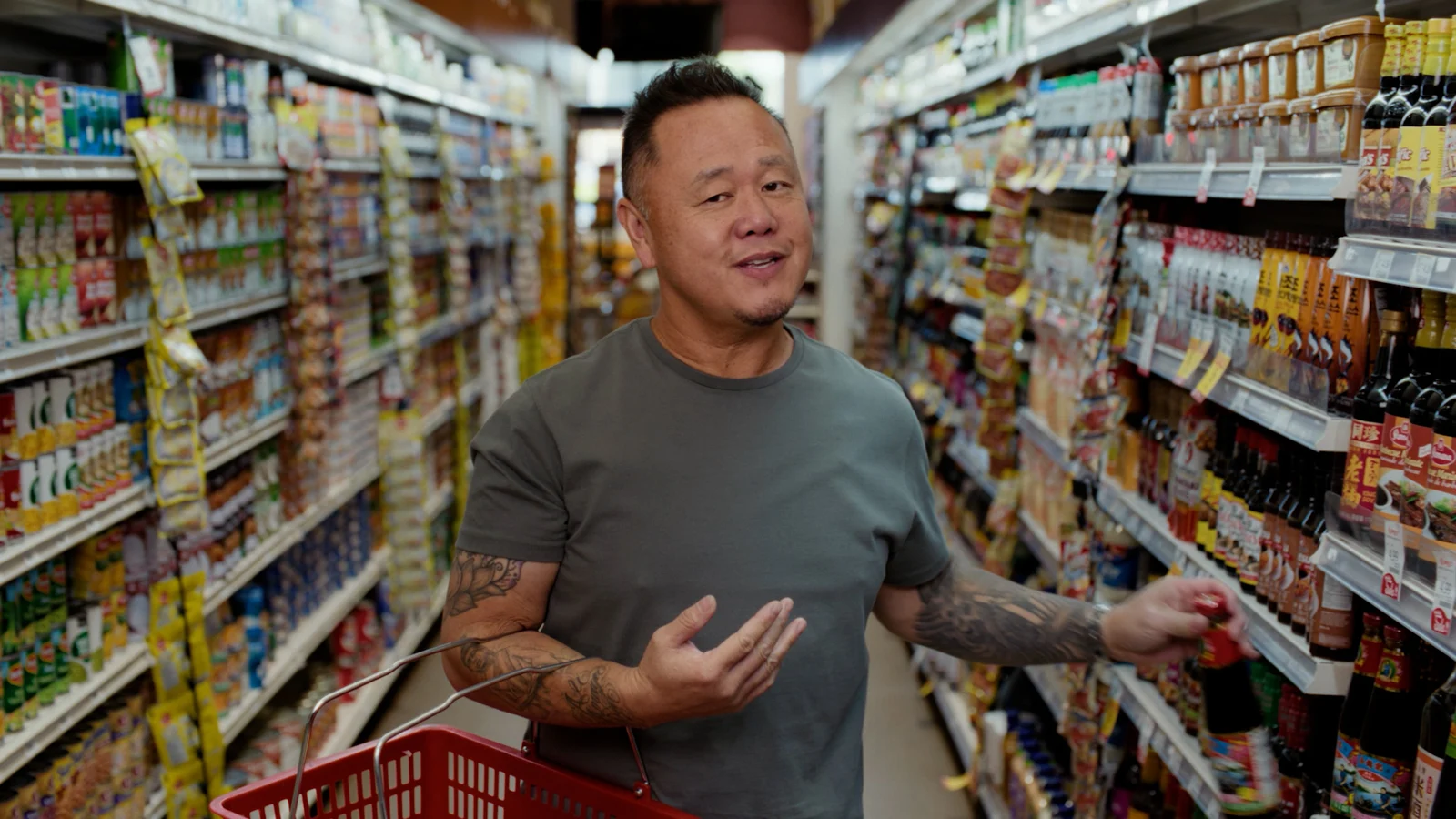
02 From the aisle to the kitchen
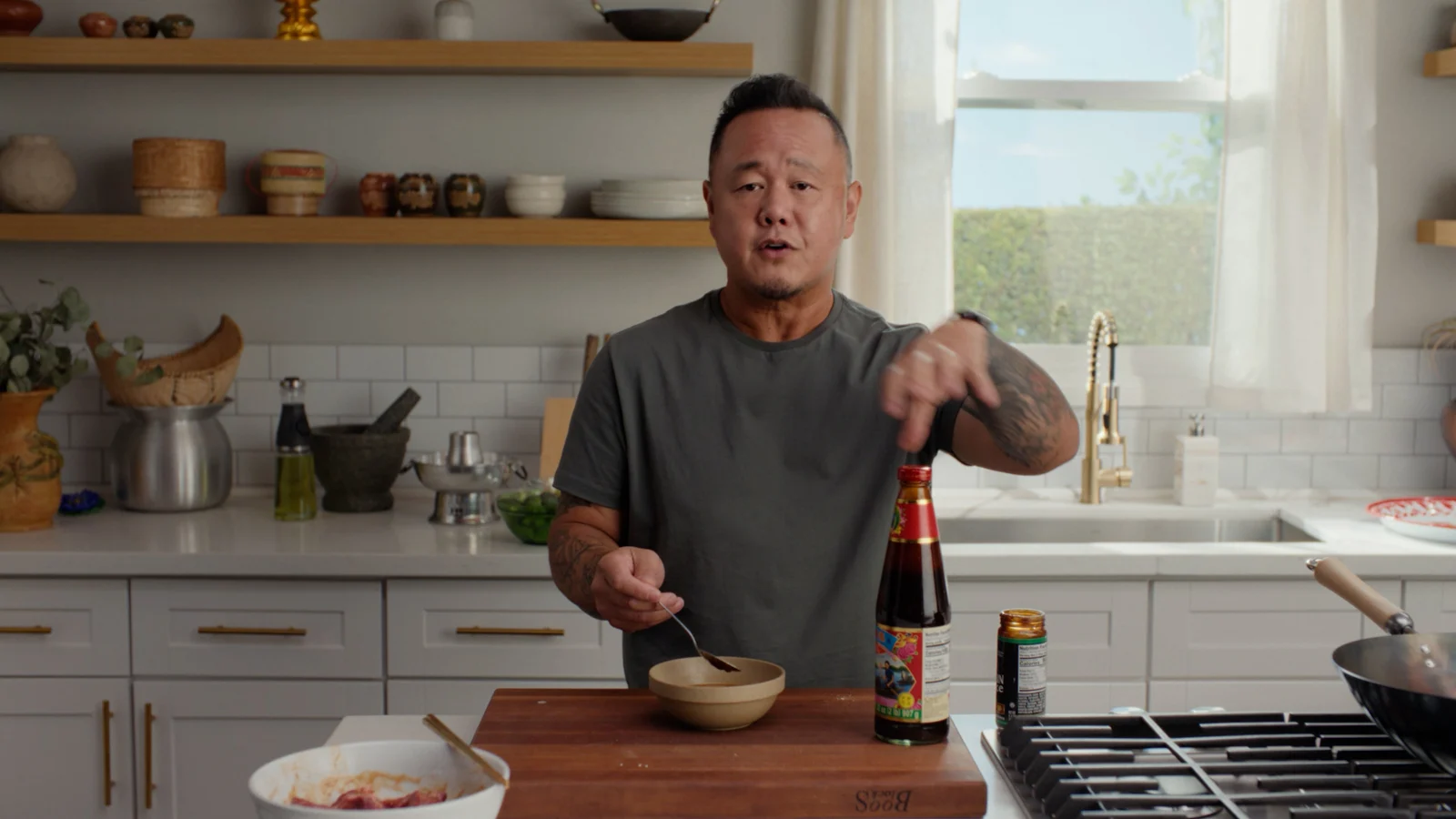
03 Jet teaching at the counter
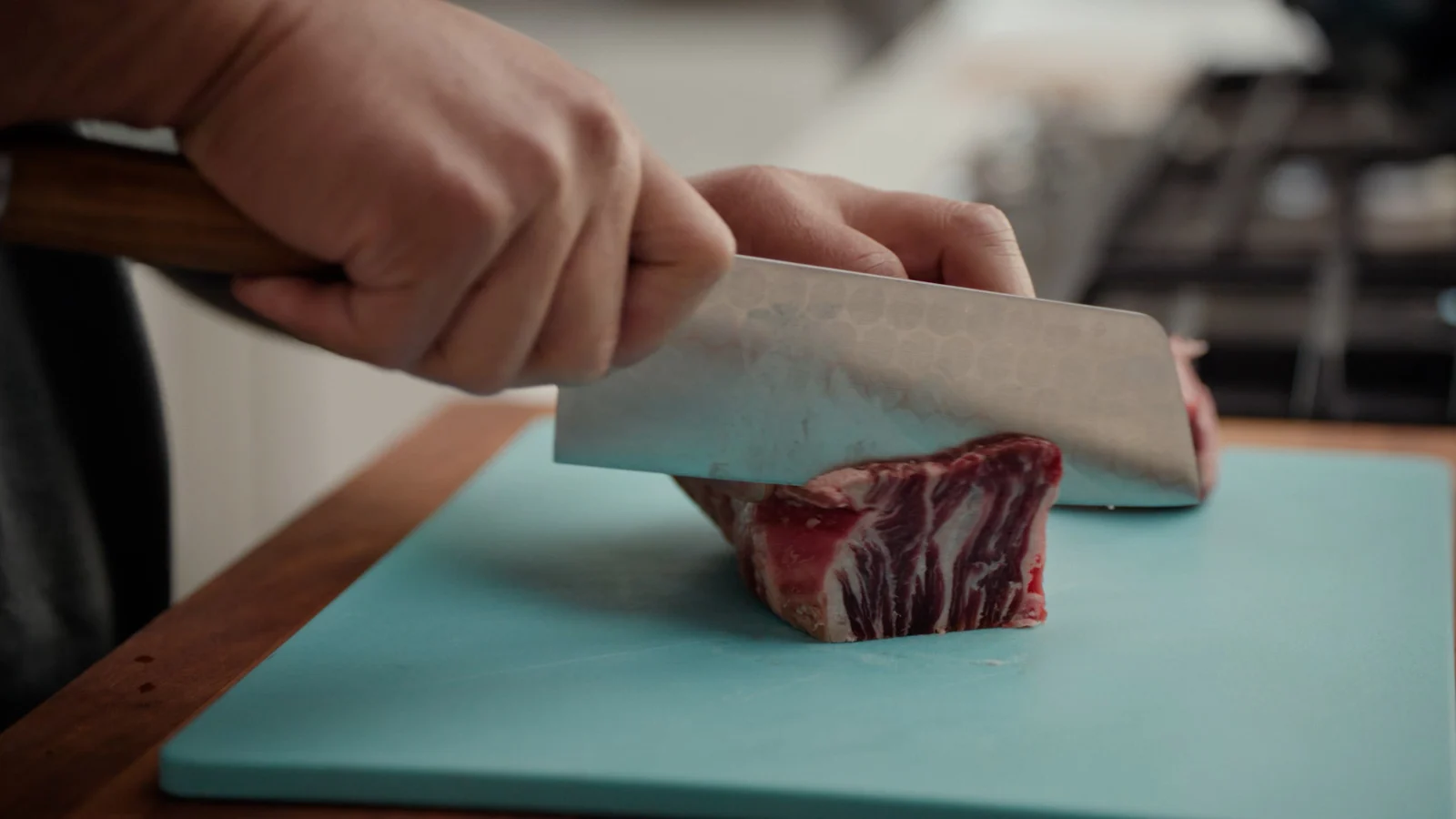
04 Knife work, close up
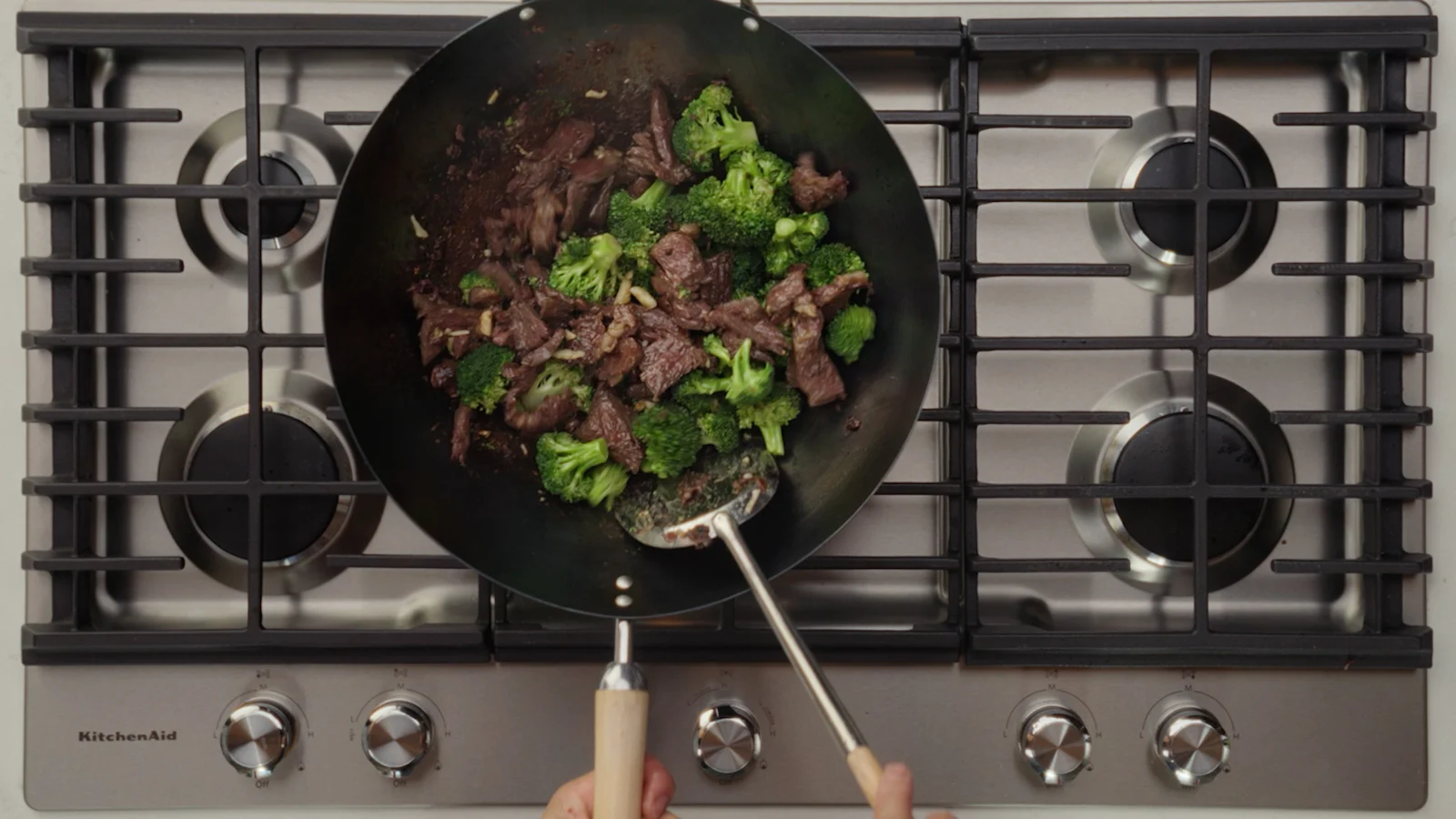
05 The stove from above
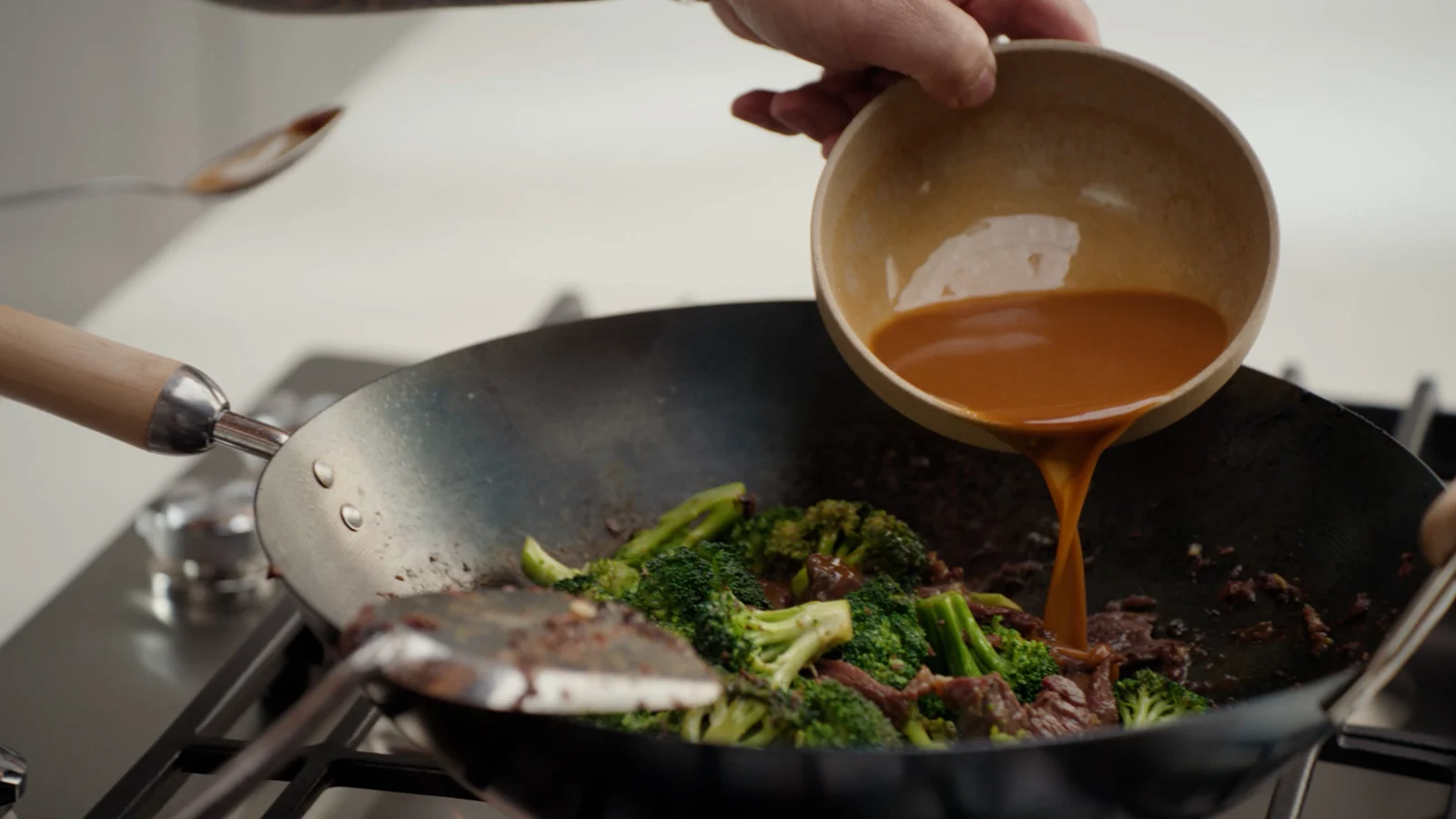
06 Sauce going in
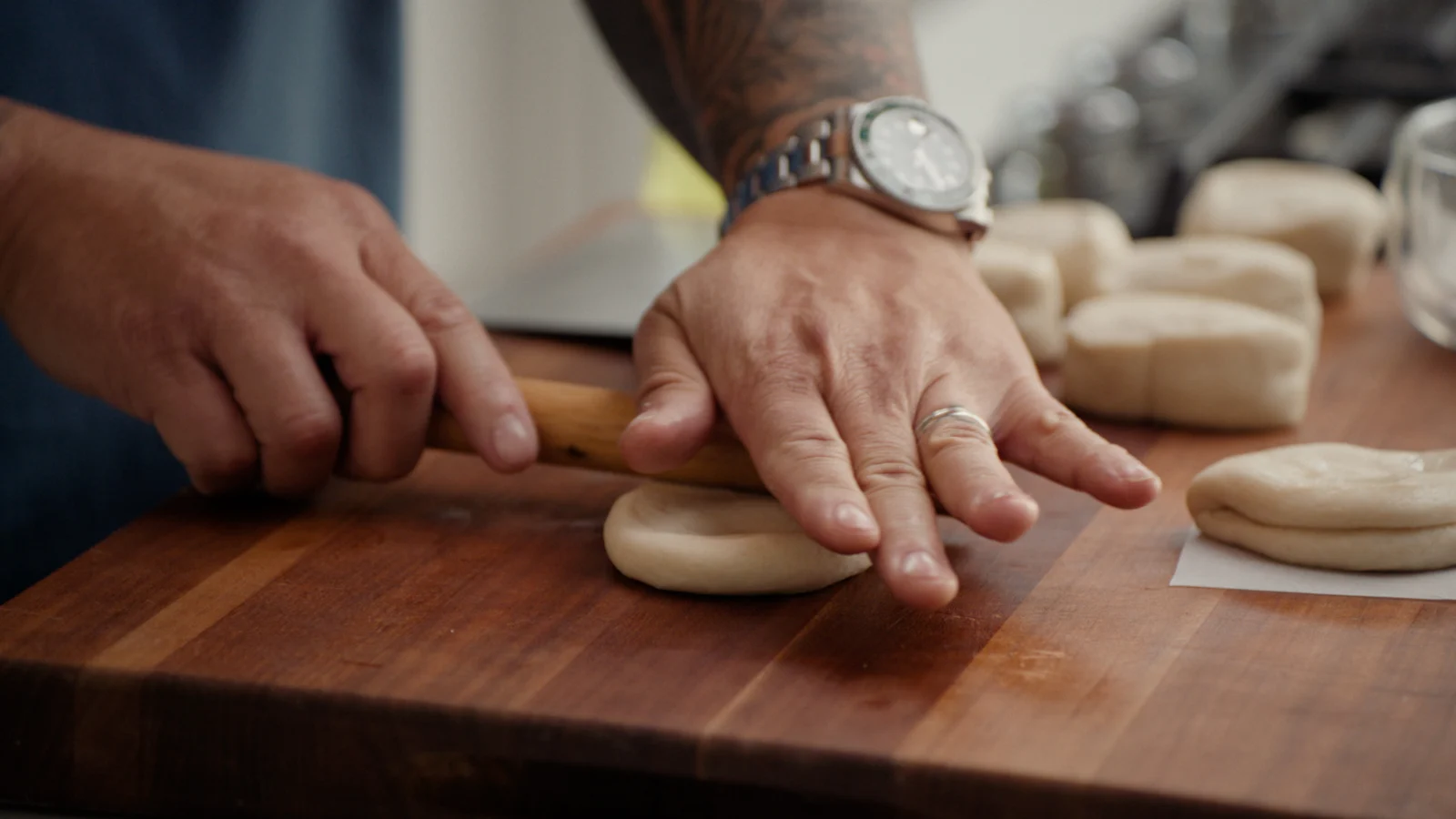
07 Dough shaped by hand
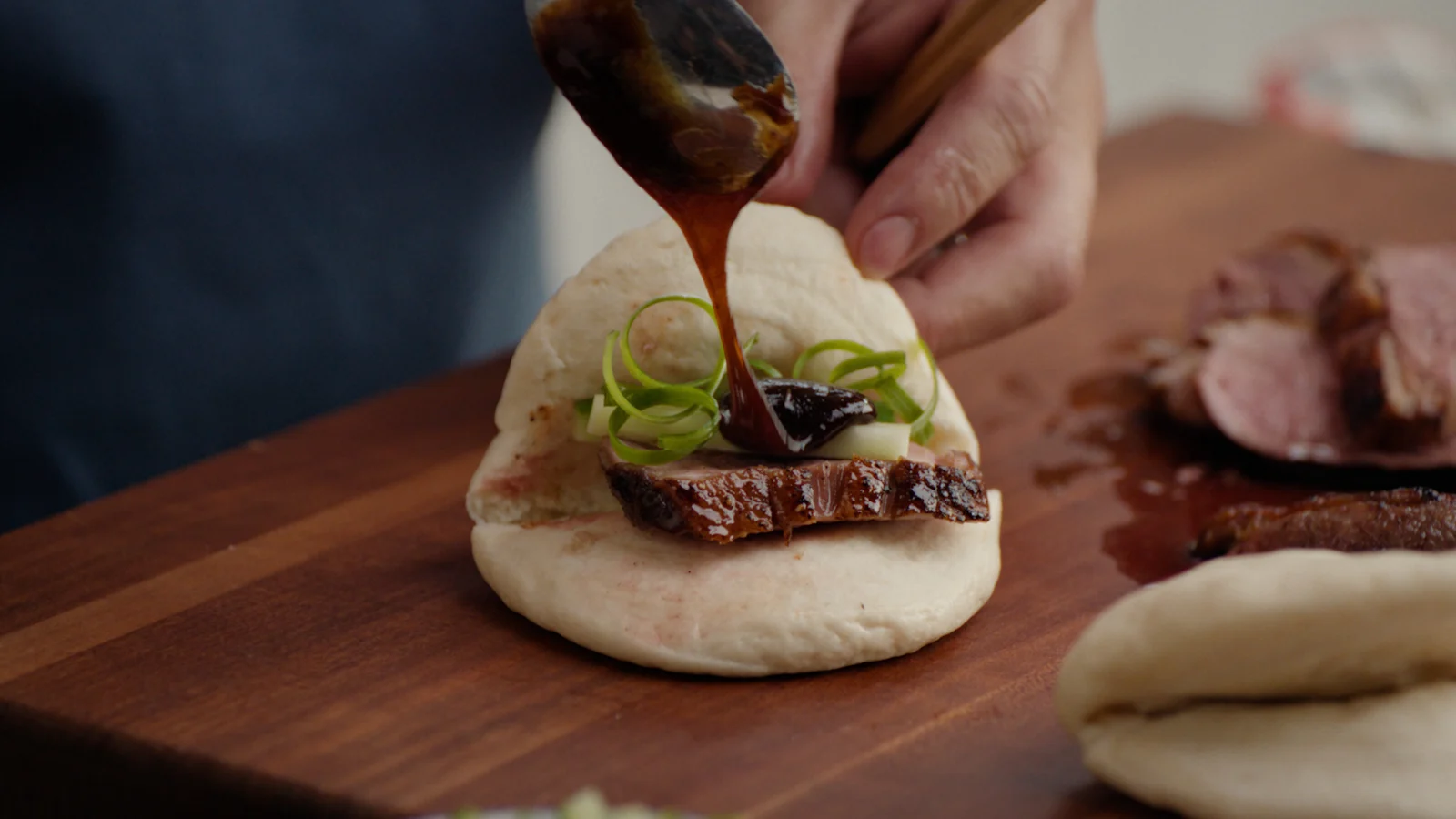
08 The last touch
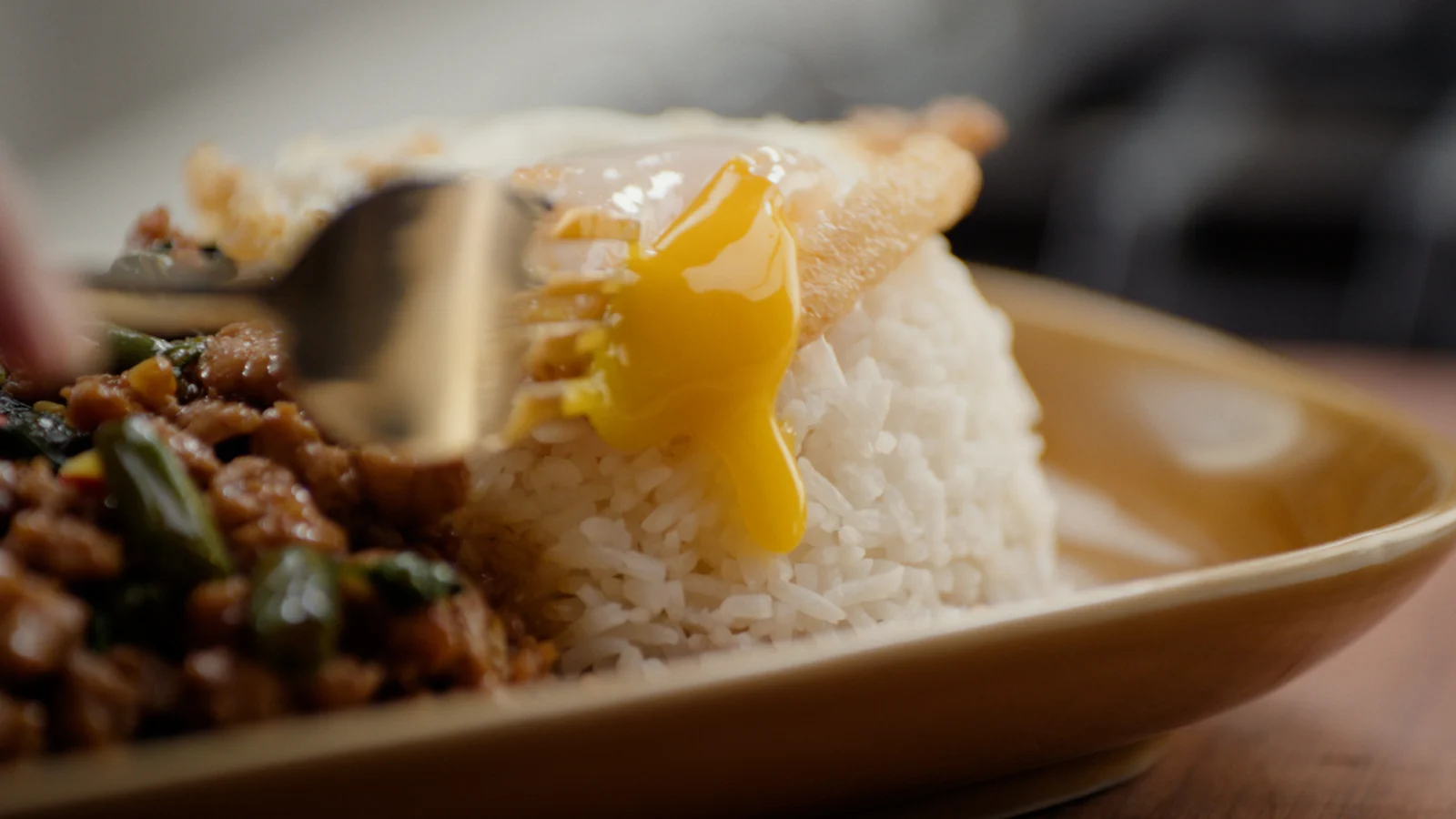
09 The finished dish
These are frames taken from the episodes. The food and talent photography commissioned for the series is shown in its own section below.
Post-production
One shoot, three ways to watch.
Editing and finishing stayed with FS MEDIA for all three outputs: the digital episodes, the social cuts and the linear shows. The work covered graphics and lower thirds, the color grade, the sound mix and technical delivery. Because the recipe pairings and the break lines had been filmed during the shoot, the television episodes were built from planned material, with nothing patched in afterward.
12
Digital episodes
YouTube stories of 10 to 15 minutes, delivered as digital masters and as generic versions.
12
Vertical social cuts
9:16 edits of 2 to 3 minutes, cut for viewing on social.
6
Broadcast episodes
Episodes for half-hour slots, each pairing two digital recipes with transitions written for television.
Trailers in horizontal and vertical formats, textless versions for the archive and split audio stems completed the delivery. Stills were part of it too: five hero images for every episode, made for the website and for social.
Photography
Five stills for every episode.
The stills were shot during the same production as the series. For every episode Mike Irving delivered five hero images, showing the dish from more than one angle and Jet holding the finished plate in the kitchen. They carried each recipe onto websites and social channels. The eight shown here are a selection.
Photography by Mike Irving.
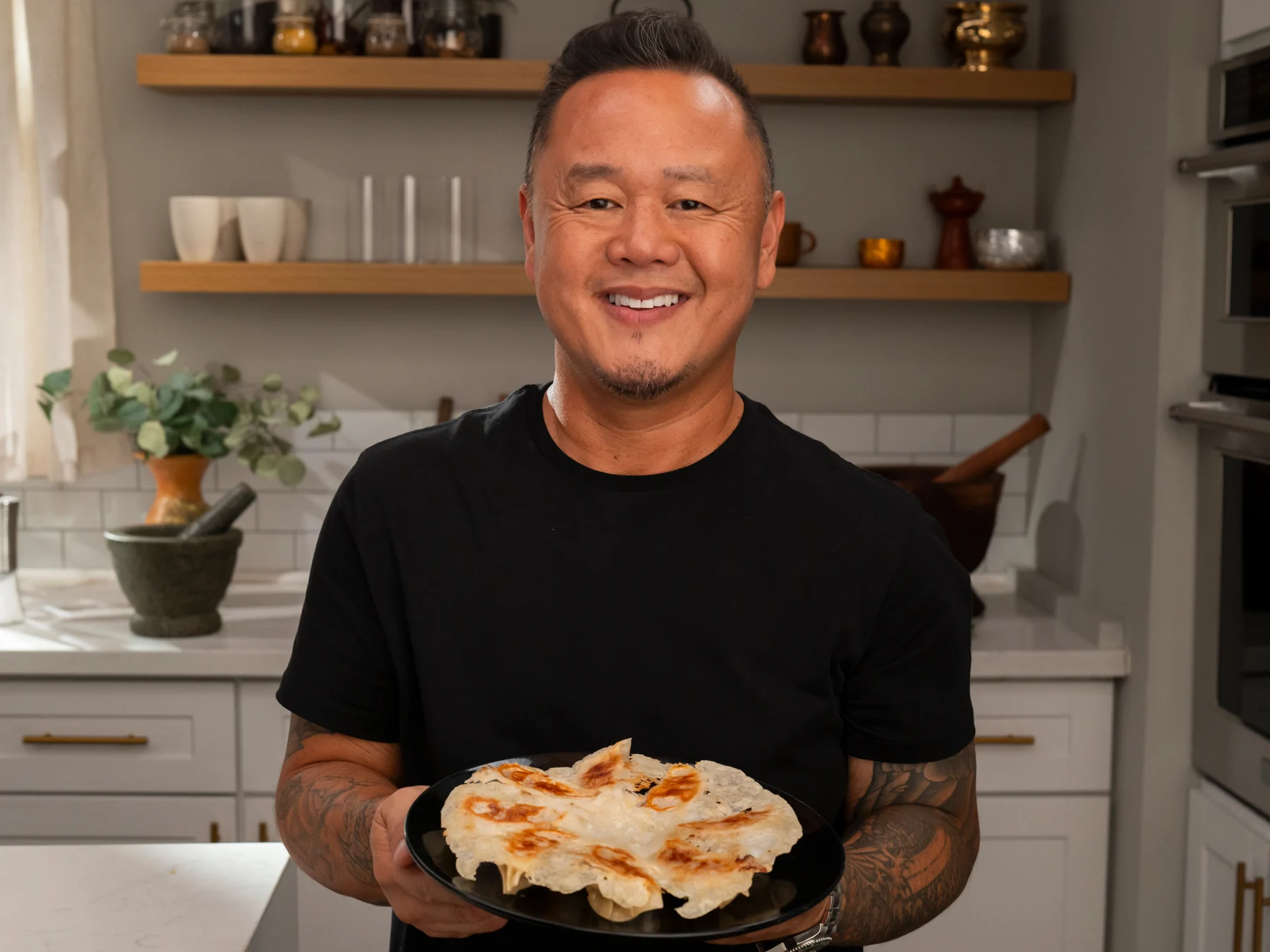
Jet Tila with potstickers
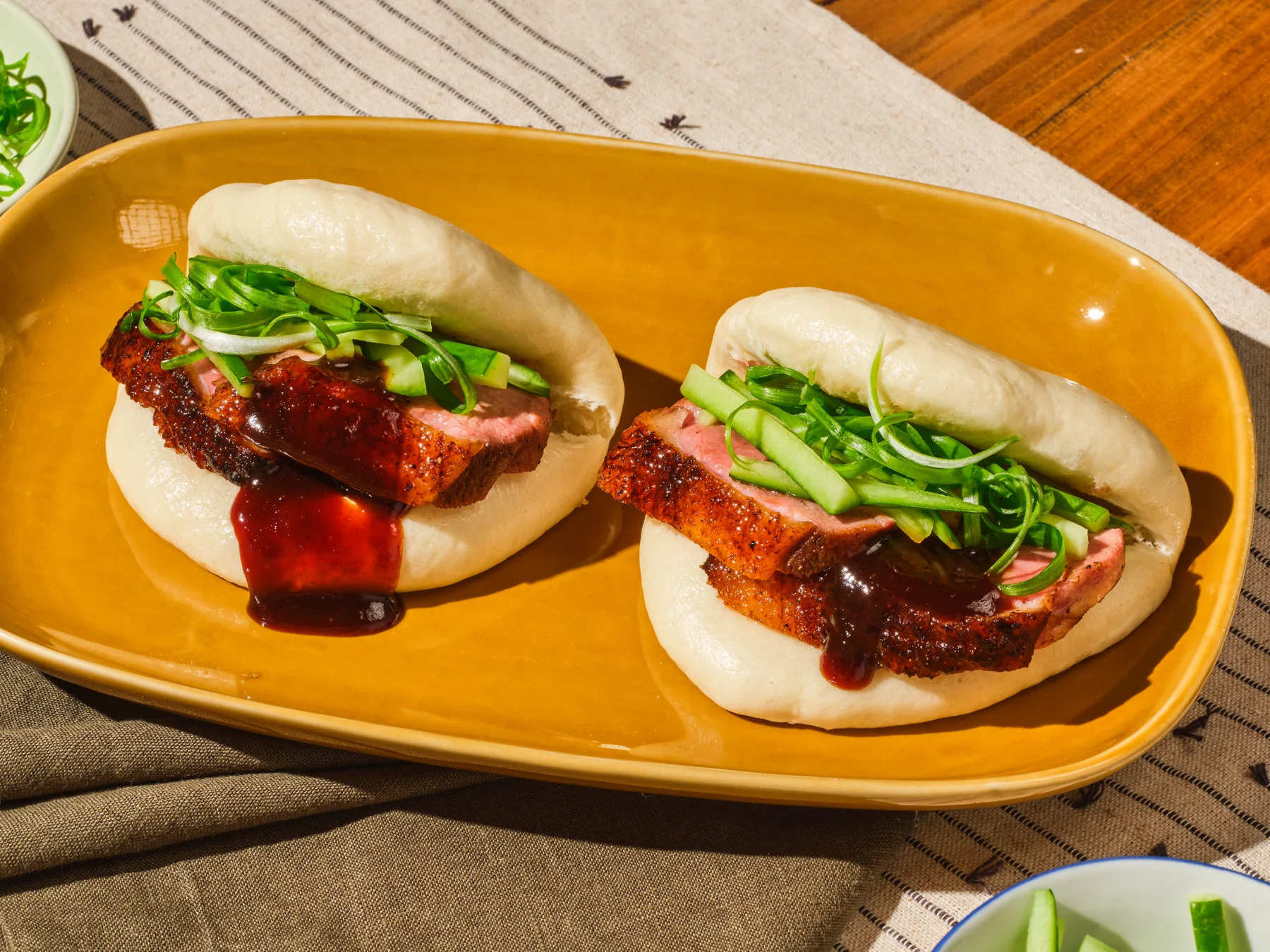
Duck bao
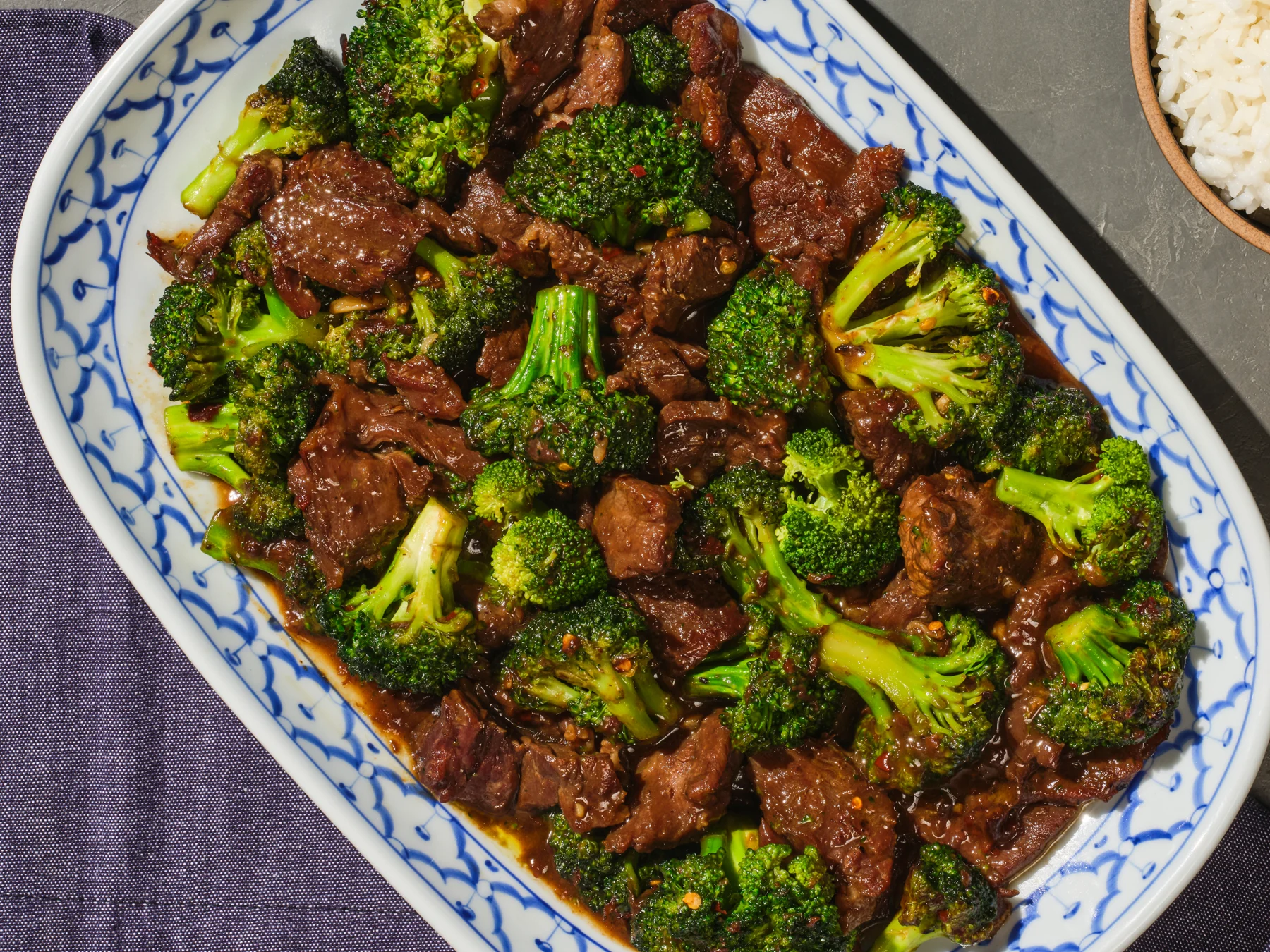
Beef and broccoli
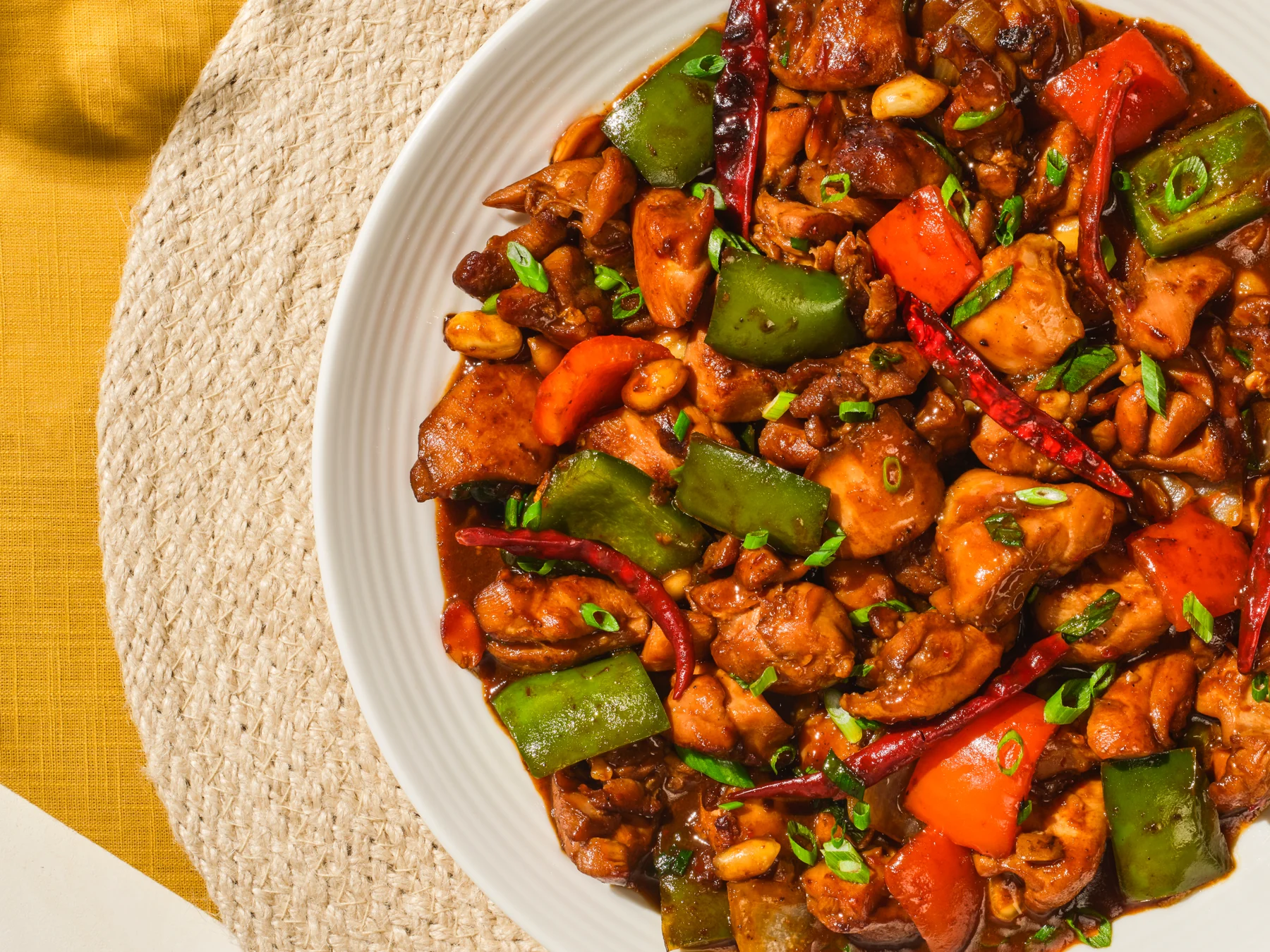
Kung pao chicken
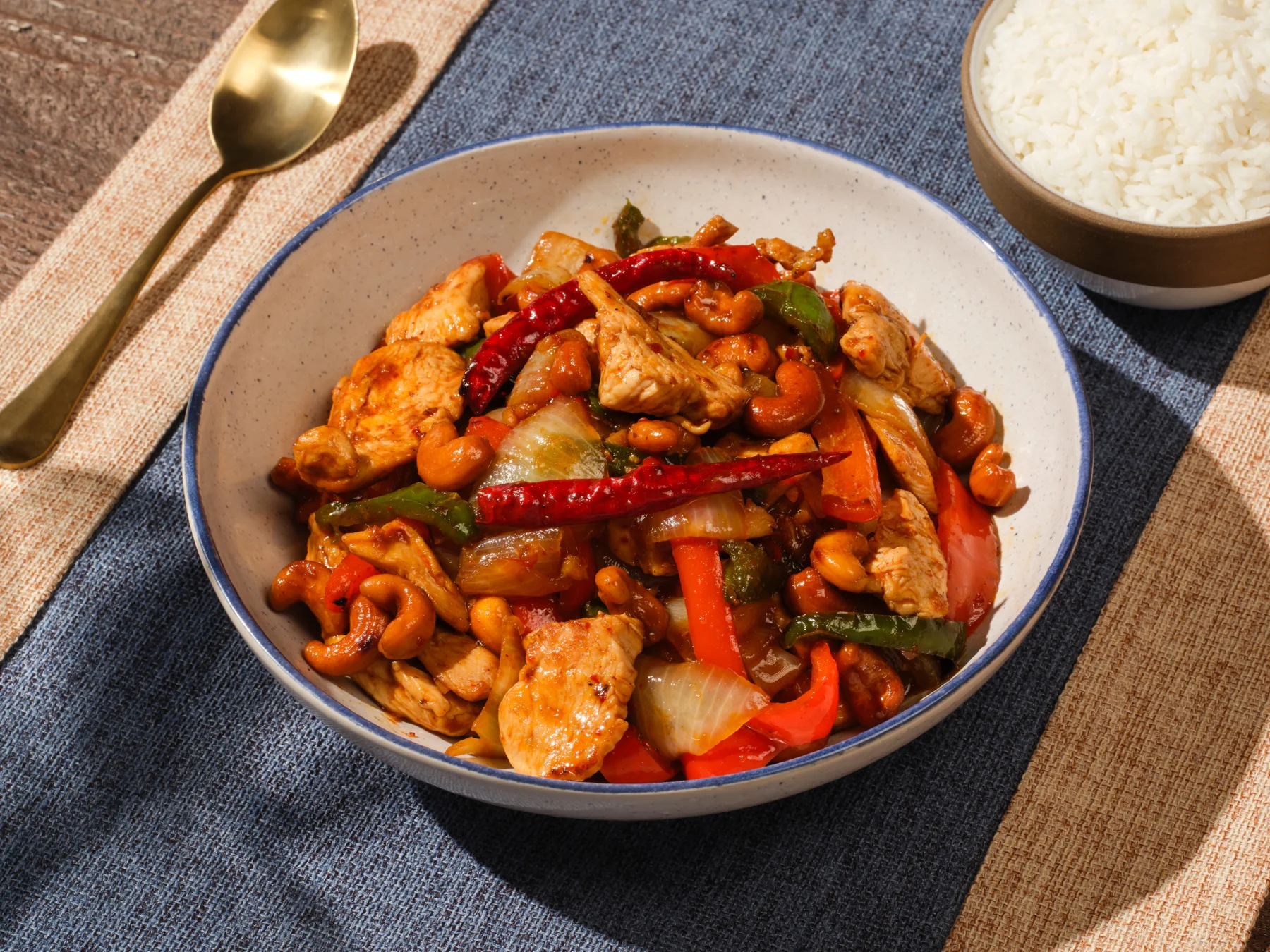
Thai cashew chicken, from an angle
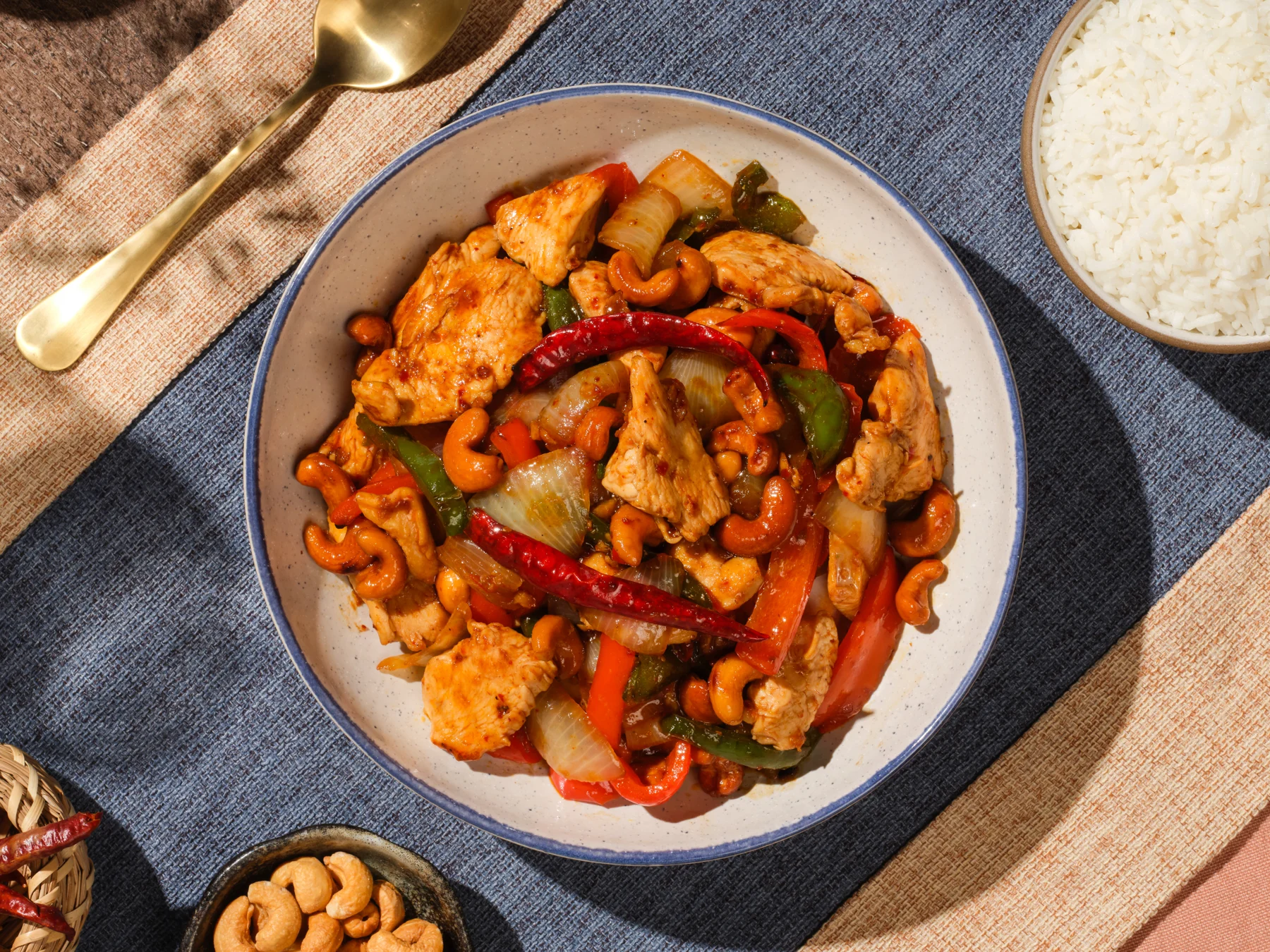
Thai cashew chicken, from above
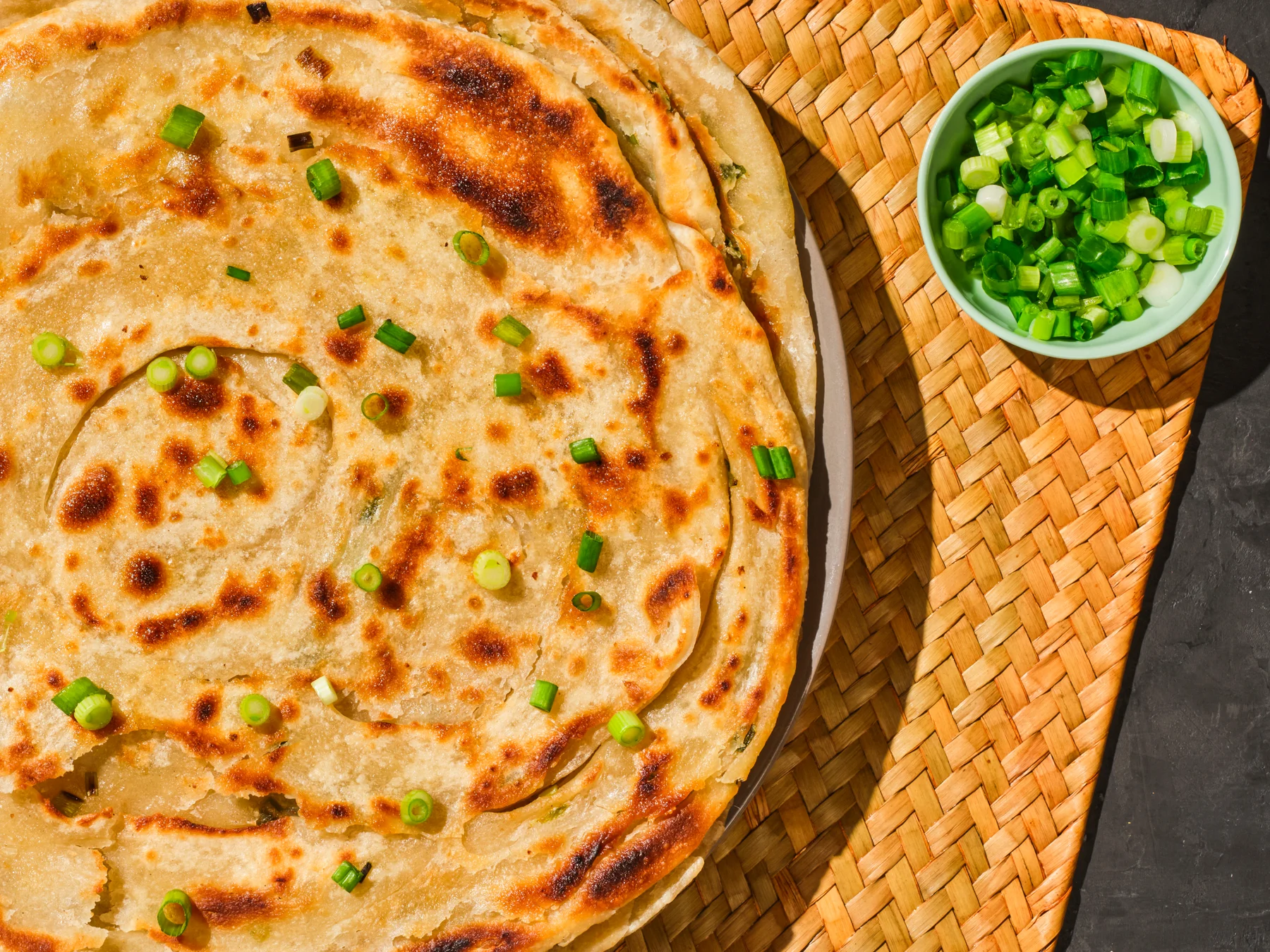
Scallion pancakes
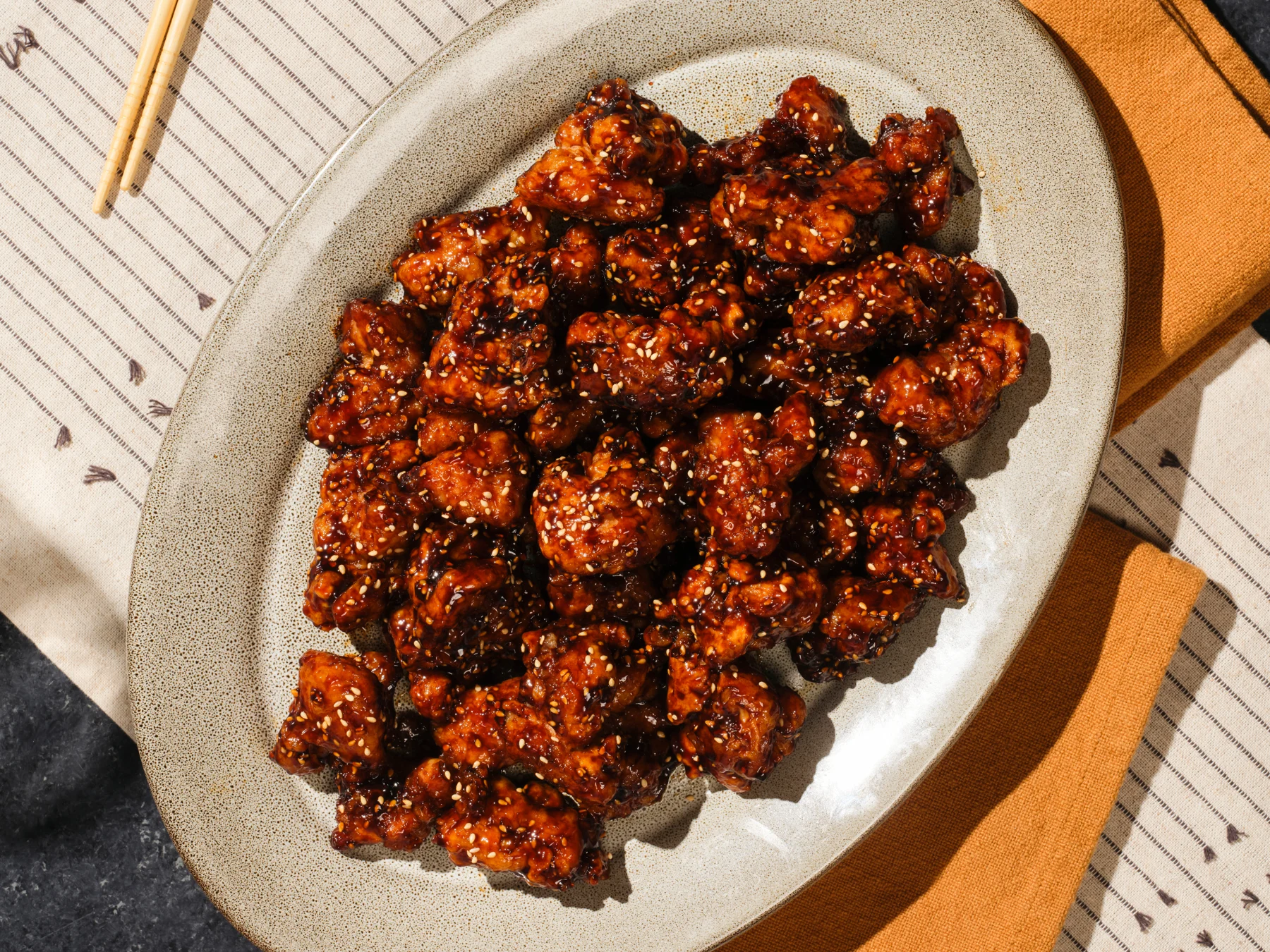
Sesame chicken
Timeline
Shot in October, first episodes delivered in December.
The project kicked off in September 2025 and the main shoot ran from October 27 to 31. The first digital episodes were delivered in December 2025, which allowed a rolling release. By March 2026 the full package, digital and linear, had cleared the network's technical review.
September 2025
Kickoff
October 27 to 31, 2025
Main shoot
December 2025
First digital episodes delivered
March 2026
Network technical review complete
Next case study
VistaJet

Let's build your next campaign together.
Tell us about your next campaign or idea. We will get back to you within one business day.
Or email contact@fsmediahouse.com